Showing posts with label articles. Show all posts

March 13, 2013

7 (+ 1) Interview questions with DuJuan Sylvester

An interview was conducted with Graphic Designer and writer DuJuan Sylvester. In it we are able to discover much about his personality and his commitment to excellence in his work.


1. Have you always wanted to be a designer?

Surprisingly, no. I did not have any formal art training early in life. As I developed creatively my interests turned to music. My dream then was a professional music career. After putting myself wholly into music my interests changed drastically. I began on the trek of creating a CD cover and website. I then got involved in online Photoshop and design contests as a hobby. After being exposed to the design world I dove in and never turned back.


2. Who is your favorite graphic designer/company?

Avinoam Noma Bar: Since I began my studies on the fundamentals of design I have been increasingly aware of the use of negative space. The visual tension that it's created often brings an added voice to a design. Competing figures ground relationships can convey contrasting ideas. As a contemporary I feel that bar's work excels at capitalizing on this principle. I will qualify that and say that I am still looking.


3. In your opinion what is the most important part of the design process?

While each part of the design process could be considered important (it is a process after all) I think the most crucial part is in the planning. Especially with the digital tools afforded today, it would be very easy for a designer to become wrapped up in the tools and software and not effectively approach the problem solving aspect. By laying out a path for the desired outcome we can more efficiently apply our creativity to the function of the design. The alternative often results in approaching a project the wrong way and devoting extra time to a solution that does not truly work.


4. Describe your biggest weakness as a designer.

I think that my biggest weakness is rooted in one of my strengths. I often have problems coming to a final decision on the revisions of a design. I spend a lot of time exploring different solutions so it can be brain-wracking for myself at least. I think if I take more time in the planning phase I can ferret out some of these creative ideas that may be best served on another project. Ultimately it is necessary that none of my weaknesses (because we all have them) will impact my clients or their image in a negative way. And I and doing  good at that thus far.


5. How would you respond if a client wanted to edit your work?

It is important in the designer-client relationship to invoke trust on both sides. My purpose is to reach the clients goal and to communicate the intended message. Having been selected for this task, I would need to stress the fact that I am the one that is trained on accomplishing the goal. While a client's input is encouraged, and necessary given the investment the client has in the project's success , I would urge them to trust the design process. My artistic pride should not be a factor, but my desire to provide the best solution should be heard. 


6. Give an example of a time you’ve gotten feedback you didn’t agree.

Having recently finished college, I am very accustomed to critique. I understand the need for feedback and embrace the process. I can recall a time recently where the critique did not line up with my intended vision. In this particular case I was the designer and client, being a self promotional piece. I accepted the feedback and applied it to my thinking process, but not the end result of the particular design. As a designer and artist, it becomes important at times to defend and express your vision so that others will understand it. 


7. How would you feel about working on a project that was against your personal moral beliefs (such as work for a tobacco company)?

The key to overcoming this situation is understanding the customer relationship. While in practice the customer may not always be right, we as designers are still in a service position. I had the benefit of being prepared for such a situation. The logo design for the fictional "Church of Lucifer" was the epitome of being contrary to my moral beliefs. The end result was a set of functional and creative designs that would have effectively meet the clients needs, had the client existed. With such an extreme example, I might forgo including the design in my portfolio.


* Overtime * What piece are you the most proud of that you designed?

This is a hard question to answer. Since I make every effort to ensure that every single project gets my full creative potential it is hard to single out one piece. If I had to choose one I would say the creative design Phantom's Beauty". This is not because of the piece itself but because of the accomplishment of it. It was created as an entry to a Photoshop contest at istockphoto. It placed third in a pool of about 150 entries. Although I did not emerge as the overall winner I am still proud of that placement.


See more of DuJuan's work at www.dujuansylvester.com

October 20, 2010

From Pixels to Print


There are many factors that need to be considered when creating a design.  Those factors increase when your content will be viewed on different types of media. As graphic designers, it becomes important to have a process in place to ensure your finished product will be clearly viewable in any situation. Current technology plays a big part in how users will view a design. Care must be taken to examine how emerging technologies will affect your designs usability and functionality. This article will outline some key points to consider when starting your next project.

May 12, 2010

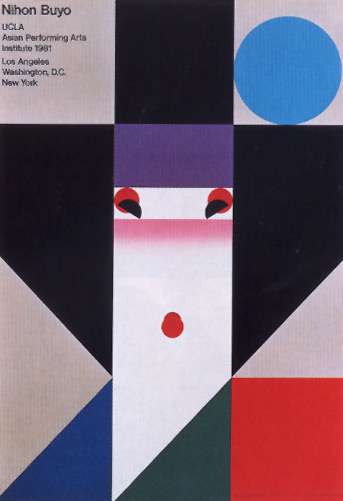
Homage to a Master - Ikko Tanaka


Ikko Tanaka is a well known graphic designer who is noted for his incorporation of Japanese tradition and International style. His work often crosses language and cultural barriers. The work I have selected to anaylze is a poster that utilizes simple geometric shapes found in every culture to form a figure that is rooted in his own culture.The color scheme chosen is found in traditional Japanese artwork.The formation of the shapes around the eyeas create a reference to the stereotypical slant that is present in the eyes of Asian people. Everything that the image itself represents seems to come from the designer's own culture.

April 30, 2010

Homage to a Master: Henryk Tomaszewski

Henryk Tomaszewski is widely considered as a modern master of graphic design. Creating posters that have thrilled and intrigued viewers for over 50 years, his work stands as an icon in creative expression.

Being of Polish descent, his portfolio embodies what  we have come to associate with European design and culture.

March 29, 2010

Michelangelo's David - A Study of Form and Function

As we learn from observation and in practice in our own art, all of our works will hold a function or purpose. Many times this purposes comes in the form of a message. In contemporary graphic design, the message that accompanies the artwork is the key and must outweigh any visual stimulation or enjoyment.

January 20, 2010

Guided Tour of Paleolithic and Neolithic Art


Guided Tour of Paleolithic and Neolithic Art
- Periodically I will be creating guided tours each week from various eras of art. Here is the first.-

The tour we will be undertaking will take us into different phases of prehistoric man and his settlements across the globe. The journey will span thousands of years and 5 continents, following man’s movement and progress.

January 11, 2010

Prehistoric treasures – Examining the Caves of Lascaux.


Looking for an art exhibit slightly different from the Lourve? Within prehistoric caves in the city of Lascaux, France lies a resource of close to 2,000 works of art. The paintings consisting largely of images of animals rivals the collection at the Lourve, and with its canvas of stone wall, surpasses it in endurance. Some of the paintings are estimated to be 16,000 years old. With the artistry that is present and knowing so little of what we know about prehistoric man, one ponders what the purpose and meaning of the paintings could be.

In searching for the meaning of the paintings found
in the Caves of Lascaux, there are some key points to consider.

January 6, 2010

Color, in the Eye of the Beholder

The perception of color is the most important factor of color as it relates to people. Color itself is an abstract concept that has no physical substance, so the single sense that aligns with color is sight. This sight is rooted in the mechanics of the eye and how the retina refracts that light. The assumption is that everyone's retina refracts light in the same way. If in fact every human eye is physically crafted the same way, then our assumption is safe. After passing through the mechanism of the eye, the sensation of light and color are received by our brain. At that point in time the perception of color begins.

November 12, 2009

DESIGN WORKS - Evaluating Artistic and Design works

Generally all of our artistic and design works are subject to five areas of evaluation. The criteria are concept/creativity, craftsmanship, design/composition, specifications, and degree of difficulty.

When applying these criteria to client commissioned works and works for inclusion in our portfolios, we find some similarities. As we investigate further, we realize there are more distinctions.